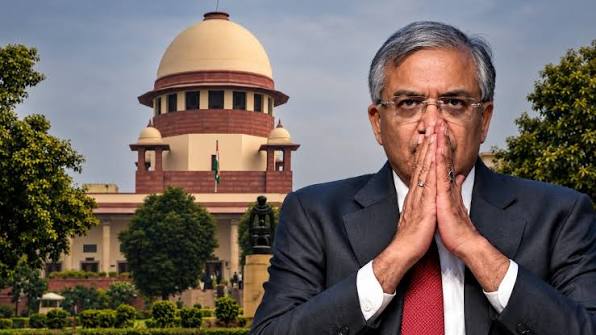
The Supreme Court on Monday declined to pass an interim order suspending Chief Election Commissioner Gyanesh Kumar but directed the Election Commission of India to produce records relating to decisions challenged in a petition over the Special Intensive Revision of electoral rolls.
A bench headed by Chief Justice of India Surya Kant and Justices Joymalya Bagchi and V Mohana is examining allegations that certain decisions were taken in the name of the Election Commission without the approval of the other two Election Commissioners, Sukhbir Singh Sandhu and Vivek Joshi.
Court Wants to Examine How Decisions Were Taken
The petition was filed by Patna resident Rakesh Kumar Singh. It challenges the manner in which the Election Commission has functioned under CEC Gyanesh Kumar and seeks scrutiny of decisions, guidelines and software-related changes connected with the SIR exercise.
During Monday's hearing, the bench indicated that it wanted to examine the official record to determine whether the disputed decisions were taken solely by the CEC or were approved by the Commission collectively.
The court specifically raised questions about the modification of Form 6, which is used by eligible citizens to apply for inclusion in the electoral roll.
Chief Justice Surya Kant said the court wanted to see who had modified the form and whether the decision had been approved through the required decision-making process. The court noted that if there was no consensus, it would need to examine whether the decision was supported by a majority.
Supreme Court Clarifies Position on Modified Form 6
The hearing also brought clarification about an earlier controversy surrounding Form 6.
The Chief Justice said the Supreme Court had not approved the modified version of Form 6 used during the SIR process.
The form had included an additional declaration related to the applicant's or their family's presence in earlier electoral rolls. Two Election Commissioners had reportedly raised objections to the change, describing it as unauthorised and calling for it to be removed.
The Election Commission later withdrew the additional SIR-related declaration in states where the revision exercise had already been completed.
Petition Seeks Action Against CEC
The petitioner has sought suspension of Gyanesh Kumar and challenged decisions allegedly taken without the concurrence of the other Election Commissioners.
The petition also seeks to invalidate the SIR exercise and related decisions if they are found to have been taken without proper constitutional or statutory authority.
The allegations gained wider attention after an Indian Express report said Election Commissioners Sukhbir Singh Sandhu and Vivek Joshi had recorded objections at least 14 times over a 10-month period to decisions and directions connected with the SIR exercise.
The reported objections involved issues including voter additions and deletions, restoration of names, appeals and access to election-related software.
ECI Says Decisions Had Legal Sanction
The Election Commission has rejected the suggestion that differences between commissioners automatically indicate that decisions were invalid.
Following the reports about the objections, the ECI said differing views and observations are part of institutional deliberations and maintained that its orders had legal sanction and followed established statutory procedures.
The Commission has also maintained that decisions concerning the SIR process were taken unanimously.
This position is now being examined against the records that the Supreme Court has asked the ECI to produce.
No Immediate Suspension of CEC
During the hearing, senior advocate Vikas Singh, appearing for the petitioner, urged the court to intervene immediately and sought a quick response from the Election Commission.
The bench, however, did not grant the requested interim suspension of Gyanesh Kumar.
Instead, the court chose to examine the underlying records and the decision-making process before considering further action.
The court's focus is therefore currently on whether the challenged decisions were properly authorised and whether the Election Commission followed the constitutional and statutory framework governing its functioning.
SIR Row Reaches the Supreme Court
The case comes amid wider legal and political controversy over the nationwide Special Intensive Revision of electoral rolls.
The SIR process and the functioning of the Election Commission have faced challenges in several courts following reports about internal objections by Election Commissioners. Multiple petitions have now raised questions about the decision-making process and the legality of actions taken during the exercise.
The Supreme Court's decision to seek the records does not by itself establish that the disputed decisions were illegal. The court will need to examine the documents and responses from the Election Commission before determining whether any action or decision should be set aside.


