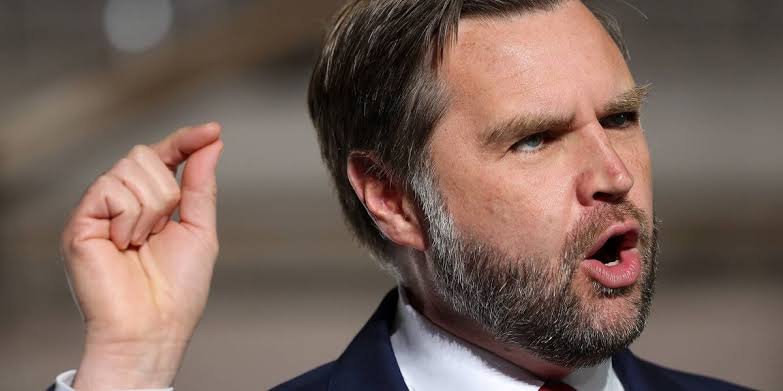
The Republican Party's widespread defeat in the US midterm elections in 2026 has revealed a deep rift between the President and the Vice-President. Both appeared to separate themselves from one another in response to the Republicans' shocking losses in the US House, Senate, and numerous state governor's houses and legislatures. Vance even went so far as to criticize the policies of the government he works for.
Vance and Trump both cited the Iran War as a contributing reason to the outcomes. But the President supported the war, stating he would fight it again, while the Vice-President appeared to doubt the logic of initiating the military operation.
JD Vance considered the war against Iran, growing living expenses, a lack of an American First strategy, and the US's relationship with Israel as the main reasons for the Republicans' lackluster performance in a long, gloomy essay on X.
Vance called out the war on Iran in a harsh public admission that the foreign offensive had reverberated domestically, even though he didn't back down from being a part of the government accountable for these elements.
Conversely, Trump acknowledged that the Iran conflict had contributed to the outcome, but he said that he did not regret it and that he would repeat the process.
Importantly, Trump gave a hazy response when questioned directly about Vance's interpretation of the midterm results. "Well, that's it. I was aware of his feelings about it. Yes, I believe that was alright. It was good, in my opinion. We were aware of that. When I entered, I was aware of that. He reportedly added, "Maybe" Vance won't run for president in 2028. "And we stopped them from having a nuclear weapon, and they will never have a nuclear weapon," he claimed.
Even while Trump's remarks were typical, they were significant because they coincided with the perception that Vance's X post was an attempt by the US vice president to launch a possible 2028 presidential campaign.
VANCE SETS AWAY FROM TRUMP
It is possible to interpret Vance's analysis of the Republican loss as an effort to recognize the problems that negatively impacted the party without outright criticizing the administration he leads. Given that Trump has always backed the military operation and justified it as vital to stop Tehran from obtaining nuclear weapons, his criticism of the Iran conflict was especially noteworthy.
The vice president also cited the administration's inability to fulfill its America First pledges and the growing cost of living. Voters' concerns have remained focused on these problems, and the election results indicate that a sizable portion of the electorate was not persuaded by the Republican message.
Vance seemed to acknowledge that the party could not just write off the loss as a short-term setback by pointing out these concerns. His comments also sparked speculation about whether, as the Republican Party starts to choose its next presidential candidate, he will try to set himself apart from Trump.
Vance is unable to completely distance himself from the administration's record, though. He has supported a number of the President's significant choices and is one of Trump's closest political allies. Therefore, any effort to portray himself as a candidate for change will have to deal with his own influence on the policies that are currently under fire.
VANCE'S FUTURE IS QUESTIONED BY TRUMP
Trump's response provided an alternative interpretation of the Republican loss. He insisted that the military effort was justifiable and that he would make the same choice again, even though he acknowledged that the Iran conflict had influenced the outcomes.
His reaction to Vance's evaluation was more illuminating. Before speculating that Vance might not run for president in 2028, Trump offered a vague response rather than categorically approving or dismissing the Vice-President's statements.I'm not sure who will run, so perhaps he won't. He told the reporters, "But I can assure you that, in terms of that war, I would have done nothing different."
The remark was made at a time when rumors about Trump's possible replacement within the Republican Party are already starting to pick up steam. After Trump's second term, Vance has long been seen as one of the key players who may advance the party's political agenda.
However, there was no hint in Trump's comments that he was prepared to support Vance as his successor. It's also possible to read the hint that the vice president might not run in 2028 as a warning that the party's future leadership is still up for debate.
ROMNEY, CRUZ, AND DESANTIS ADD TO THE LEADERSHIP DEBATE
The rift between Trump and Vance is developing in tandem with a broader discussion about the Republican Party's leadership and election strategy. Following the defeats, Republican leaders like as Florida Governor Ron DeSantis have also expressed opinions about the party's future.
DeSantis has cautioned that if Republicans don't change their strategy, they may suffer protracted election losses.
His comments suggest that different perspectives on how the GOP might improve its political status have emerged as a result of the defeat.
Ted Cruz, a senator from Texas, has also urged the party to address the economic concerns of the electorate. Cruz stated on his podcast that Republicans must address the problems that working Americans face.We must pay attention and react. We must support economic policies that actually improve the lives of working people and address the fallout," Cruz stated.
His remarks coincided with mounting criticism of the Middle East conflict, the administration's tariffs, and the building of data centers. Cruz warned that "Texas is blue" and expressed concerns about the state's shifting political scene.
In a post on X, former Republican Senator Mitt Romney also criticized the party's direction, citing Trump's tariffs, what he called a "impulsive" war, and obvious corruption.
"Bad politics are the result of bad policies and terrible character. I'm hoping for a change in direction for both my party and the nation," Romney stated.
Republican leaders' concerns about the party's economic messaging, foreign policy choices, and political trajectory are reflected in the statements made by Cruz and Romney.
The Republican leadership is under pressure to explain the magnitude of the defeats and determine the necessary reforms before the next election cycle, as Democrats have taken control of both chambers of Congress.
As a result, the defeat has evolved beyond a disagreement over specific policy. It has sparked debate about whether the party should stick with Trump's political strategy or start getting ready to hand off power to a new generation of leaders.
In the midst of Republican uncertainty, the road to 2028 begins.
Vance finds the political math challenging. He needs to establish himself as a leader who can solve the issues that led to the Republican defeat while preserving his relationship with Trump and the President's followers.
His reputation among the party's loyal supporters could be harmed by a dramatic split with Trump. However, Vance may find it challenging to portray himself as a candidate with a clear political vision if he continues to be closely aligned with every decision made by the administration.
Meanwhile, Trump still has a lot of sway over the Republican Party. Even as other Republican leaders start preparing for the upcoming election, his remarks regarding Vance's potential presidential campaign imply that he has not yet resolved the succession issue.
In addition to highlighting the political dangers of the administration's strategy, the election results have sped up the discussion about Trump's successor. The President and Vice-President continue to serve in the same administration for the time being. However, their divergent reactions to the loss imply that the struggle for the party's future may already have started.


