There was no obvious winner in the closely anticipated Israeli elections. Prime Minister Benjamin Netanyahu was not given a majority by the electorate. However, they also did not turn him down. With Netanyahu's survival in jeopardy, the uncertainty has now opened the door to weeks of political discussions. After leading Israel through the October 7 Hamas attack and the ensuing conflicts in Gaza, Lebanon, and Iran, what is in store for Netanyahu? What does it signify for India, more significantly? Today, our report will decipher this.
Here's a peek at the numbers before we continue. In the 120-member Knesset, Netanyahu's right-wing bloc led by Likud secured the most seats (53). Eight of the sixty-one required to form the next government are missing. Under the leadership of former military chief Gadi Eisenkot, the opposition bloc has won 48 seats. A record 19 seats were gained by Arab-led parties.
A KINGMAKER EMERGES FROM ARAB PARTIES
In essence, neither of the blocs could establish a government without the Arab parties' backing, which may make them kingmakers. Things start to become intriguing at this point.
The Joint List and the Ra'am are two Arab-led groups that Netanyahu and Eisenkot have previously ruled out forming alliances with. Eisenkot has recently changed his position, indicating that he would be amenable to working with the Arab parties under certain restrictions.
There are currently three options: a national unity government led by Eisenkot and supported by Arab parties, a coalition led by Netanyahu and defectors from Eisenkot's group, or an Eisenkot-led government supported by Arab parties.
Netanyahu will suffer greatly if the first option comes to pass. A Netanyahu-mukt government will almost probably begin an official investigation into suspected security failings related to the devastating Hamas-led strike on October 7, 2023, in addition of the long-standing corruption charges against him.
But that's a big if. Netanyahu is known to be a master of political manipulation, and no one can fathom what rabbit he may pull out of his hat this time.
For now, all eyes will be on Israeli President Isaac Herzog. He will first call the leader of the largest party to try to form the new government - in this case, Netanyahu.
Netanyahu will have up to 42 days to attempt to build the cabinet in accordance with convention. The head of the second-largest party will take over if he fails, and they will have 28 days. A third candidate is given a 14-day window if they are not selected. New elections will be held if no government has been established.
WHAT ARE THE POSSIBLE SCENARIOS? 1.
Gadi Eisenkot's cooperation with the Arab-led parties will be the simplest solution. They will now have a solid majority in the Knesset with 67 members. But since Eisenkot and his allies have consistently rejected such a move before to the elections, such a partnership is still doubtful.
Regarding Hamas and the conflict in Gaza, both hold different opinions. Some Arab parties have declined to denounce Hamas as a terrorist group or support the military objective of its eradication.
Eisenkot, a former head of the IDF, has adopted a tough stance against Hamas and Iran. He is against Palestinian statehood as well. His disagreements with Netanyahu primarily center on domestic matters, including as ultra-Orthodox Jews' exemptions from military duty.
The pressure on Eisenkot has increased since Netanyahu declared that any such coalition would be a betrayal of Israel's Jewish identity and a threat to national security.
The Palestinian citizens of Israel are represented by the Arab-led parties. They comprise 20% of the population and are closely related to Palestinians in Gaza and the West Bank. An Arab party has only ever entered a governing coalition once, in 2021. That administration was only in place for about eighteen months.
Scenario 2
The second option is a unity administration in which Netanyahu and Eisenkot work together with some compromise. Netanyahu might have to part ways with some of his far-right supporters who supported him throughout the confrontations with Iran and Hezbollah.
Eisenkot has, however, consistently promised not to work in a Netanyahu-led administration. He has accused him of weakening Israel's democratic institutions and blamed him for security lapses related to the Hamas attack. Most importantly, the two leaders will also need to decide who will be prime minister.
Scenario 3
Poach defectors if nothing else works. A third scenario might resemble that.
Netanyahu might attempt to entice some of his erstwhile supporters from the Eisenkot camp, such as right-wing party leaders Avigdor Lieberman and Naftali Bennett.
However, Eisenkot might not benefit from it. Over the years, Netanyahu's ultra-Orthodox and far-right supporters have shown him unwavering loyalty.
NEW POLLS
Israel will probably have new elections the following year if things don't work out. Since Netanyahu will continue to serve as the acting prime minister until then, it won't be a bad choice for him.
Netanyahu will answer calls about security in his capacity as interim prime minister. After the US midterm elections next week, there is a lot of talk about the US and Israel starting much larger-scale military combat operations against Iran. Netanyahu might benefit from a new confrontation with Iran.
HOW MAY THE RESULTS OF THE ISRAEL ELECTION IMPACT INDIA?
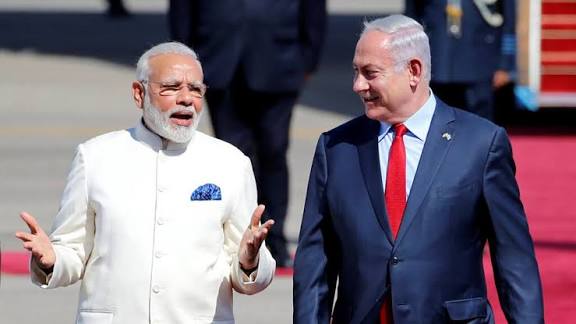
India-Israel relations have solidified during the last many years. Prime Minister Narendra Modi and Netanyahu are recognized for their camaraderie and close relationship. When the Prime Minister visited Israel in 2017, who can forget the pictures of Modi and Netanyahu walking barefoot on the Olga beach?
The presidents' friendship has made sure that the connection between Israel and India is no longer limited to the purchase of arms. In the areas of technology, cybersecurity, artificial intelligence, space, agriculture, and commerce, both nations have strengthened their cooperation.
During PM Modi's visit to Israel in February 2026, the relationship was upgraded to a "special strategic partnership."
Nonetheless, the core tenet of India-Israel relations continues to be defense. In actuality, 40% of Israel's overall arms shipments go to India. India is largely dependent on Israeli missiles, air defense systems, drones, surveillance devices, and small guns and weaponry.
In keeping with India's Atmanirbhar initiative, the emphasis will probably move in the future toward cooperative production and technology sharing. It is unclear how the incoming leader will treat India if Netanyahu is not elected prime minister.
However, it is doubtful that a shift in Israel's government will cause relations with India to deteriorate. The nations are solid strategic partners. Under Naftali Bennett and Yair Lapid, Netanyahu's predecessors, the friendship remained solid.
Therefore, it is anticipated that the robust defense and strategic alliance will persist regardless of the next leader.


