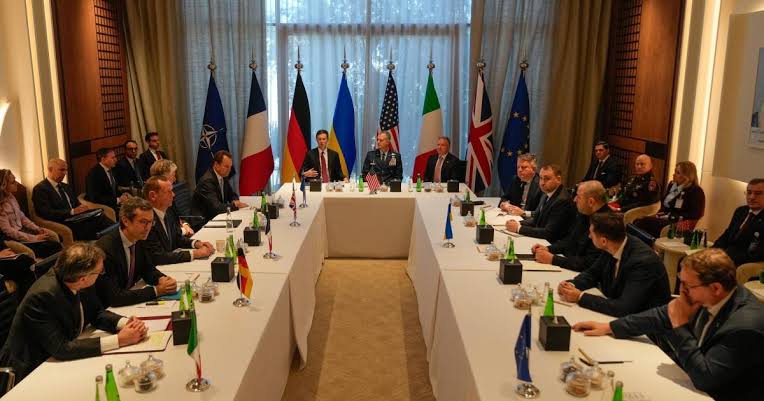
India has disclosed information about New Delhi's diplomatic attempts to put a stop to the conflict between Russia and Ukraine, claiming that discussions are occurring "at the highest level" with both nations and other relevant parties. Tuesday's revelation coincided with the start of US-mediated peace negotiations between Russia and Ukraine in Abu Dhabi. India has been advocating for a ceasefire that would cover energy and food exports, Black Sea shipping, and "a possible non-attack arrangement." Does India actively participate in the peace process between Russia and Ukraine?
Randhir Jaiswal, a spokeswoman for the Ministry of External Affairs (MEA), stated that New Delhi was pursuing diplomatic initiatives involving Moscow, Kyiv, and other "interested parties" during a news briefing on Tuesday.I've given you a thorough explanation of the initiatives we're taking in relation to Ukraine. We are having high-level discussions about this issue with both nations and other relevant parties," Jaiswal stated.
His remarks were made the day after External Affairs Minister S Jaishankar met with Russian counterpart Sergey Lavrov and Prime Minister Narendra Modi spoke with Ukrainian President Volodymyr Zelenskyy.
On this front, changes have happened quickly. Zelenskyy asked India for help in creating Black Sea food corridors on Monday, November 9. After almost nine months, US, Russian, and Ukrainian officials started talks in the United Arab Emirates on Tuesday. According to reports during the previous month, India may have offered a three-part ceasefire, which Ukraine said was the most comprehensive of several offers it has received.
Prior to US-brokered peace negotiations with Russia in Abu Dhabi, President Zelenskyy reportedly asked India for help in ending the war, according to a Monday article from the Ukrainian publication Kyiv Independent. Zelenskyy asked New Delhi to use its diplomatic connections with other international leaders to further peace efforts and stated that India was prepared to assist in mediating the creation of Black Sea food corridors.
There is now hope that New Delhi's diplomatic initiatives can help create momentum for a more comprehensive peace agreement between Russia and Ukraine.
The war started on February 24, 2022, when Russia launched a full-scale invasion of eastern Ukraine. Since then, it has killed at least 17,968 people, according to the UN's most recent verifiable numbers. UNHCR and IOM estimate that almost 9.5 million Ukrainians are still displaced, including 5.9 million refugees abroad and nearly 3.6 million within the country.
WHAT INDIA SAID RELATING TO THE RUSSIA-UKRAINE PEACE INITIATIVE
Randhir Jaiswal affirmed during the briefing on Tuesday that India had sent Russia and Ukraine specific ideas.
"In recent months, the Prime Minister has expressed and articulated that endless wars must now give way to an end of war," he stated.India has interacted with both Russia and Ukraine in keeping with this goal of bringing peace to the region, and we have communicated some thoughts to them," Jaiswal continued.
The safety of commercial shipping in the Black Sea, addressing pressing issues with energy and grain exports, and potential non-attack agreements were among the ideas, he said.We have discussed the food corridor issue with both sides, and India is still in contact with interested parties and both sides to help bring peace back to the area," Jaiswal continued.
The comments imply that New Delhi's engagement has progressed from calls for communication to talking about concrete steps that could lessen hostilities. This occurs even as the results of the US-brokered peace negotiations between Moscow and Kyiv in Abu Dhabi continue to be complicated by profound differences over territorial concessions and Ukraine's future security.
WHAT IS THE THREE-PART TRUCE PLAN IN INDIA?
This week was not the start of India's diplomatic efforts. The Hindustan Times reported on October 7 that New Delhi had suggested a three-part ceasefire between Russia and Ukraine, citing sources acquainted with the talks.
According to the study, the strategy aimed to prevent strikes on commercial ships in the Black Sea, prevent attacks on energy installations and other vital infrastructure, and maintain the flow of grain and oil supplies through regional ports.
The suggestion was allegedly communicated by Foreign Minister Jaishankar to Zelenskyy and Ukrainian Foreign Minister Andrii Sybiha during his visit to Kyiv on September 3.
Sybiha admitted on October 2 that the United States, Egypt, India, and Turkey had made ceasefire proposals.India's proposal is the most thorough, according to Sybiha.
Early in October, Russian President Vladimir Putin also praised Modi's diplomatic efforts, stating that the Indian Prime Minister had "excellent ideas" for reaching a compromise.
Additionally, there is a clear connection between New Delhi's proposal and Indian interests. Indian sailors have been put in risk by attacks on commerce ships, which have also interfered with the transportation of crucial goods like food and oil. Millions of vulnerable people have been put in danger by these disruptions, which have increased shipping costs and put pressure on food and fuel prices, especially in Global South nations that rely largely on imports.
According to MEA spokesperson Randhir Jaiswal's fatality estimates, which were made public on November 3, five Indian seafarers were murdered and two were still unaccounted for in Black Sea shipping strikes connected to the conflict between Russia and Ukraine.
India imported almost 1.97 million barrels of Russian crude per day in October, making up about 35% of its total oil imports, according to commodity intelligence firm Kpler.
JAISHANKAR'S CONVERSATION WITH LAVROV AND MODI'S CALL WITH ZELENSKYY
With talks taking place in Abu Dhabi, the capital of the United Arab Emirates, and India's top leadership meeting with the presidents of both European countries, the most recent diplomatic action on the Russia-Ukraine peace front has intensified.
PM Modi discussed the violence, its humanitarian effects, and continuing peace initiatives with Zelenskyy on Monday. Zelenskyy later stated that Ukraine wanted India to help resolve the war by using its diplomatic ties.Zelenskyy stated, "It is crucial that India determine what actions it can take and what discussions it can have with other leaders to help end the war.
One potential area of collaboration, according to him, is food security. Zelenskyy stated, "India is ready to mediate in establishing food corridors, and we are counting on these efforts to continue," according to the Kyiv Independent.
In the meantime, Jaishankar discussed the war and current diplomatic efforts with Lavrov, his Russian colleague.
The Business Standard, a newspaper published in New Delhi, stated on November 9 that India had been talking to both parties for months about maritime security and the interruption of vital commodities deliveries.
Jaishankar had described how the Global South was disproportionately impacted by disruptions to petroleum, food, fertilizers, and financing during the Kautilya Economic Conclave in early October.
WHAT IS TAKING PLACE AT THE ABU DHABI PEACE TALKS?
Negotiations between US, Russian, and Ukrainian representatives started in Abu Dhabi on Tuesday, November 10, and are expected to continue on Wednesday, November 11.
Following the collapse of negotiations in February, these are the first trilateral talks mediated by the United States.
Steve Witkoff and Jared Kushner, Donald Trump's envoys, are part of the American delegation. According to Reuters, the talks include post-war security structures, humanitarian measures, de-escalation, and ending the war.
Nonetheless, the opposing parties continue to have fundamental differences.
Russia desires limitations on Ukraine's future military capability as well as territory concessions. Kyiv demands reliable security assurances against another Russian assault and has refused to cede land.
In conclusion, it is possible that New Delhi will not be present at the trilateral negotiation table in Abu Dhabi. Additionally, neither Moscow nor Kyiv have agreed to India's three-point cease-fire proposal. What India has verified are talks at the highest diplomatic level, detailed suggestions on economic and marine security, and ongoing interaction with both nations.
It has channels to both sides thanks to its ties to Moscow, Kyiv, and New Delhi's top leadership. India has always supported communication and diplomacy, even while its interests in global trade and energy supply provide it a practical reason to seek de-escalation. PM Modi has repeatedly emphasized that.


