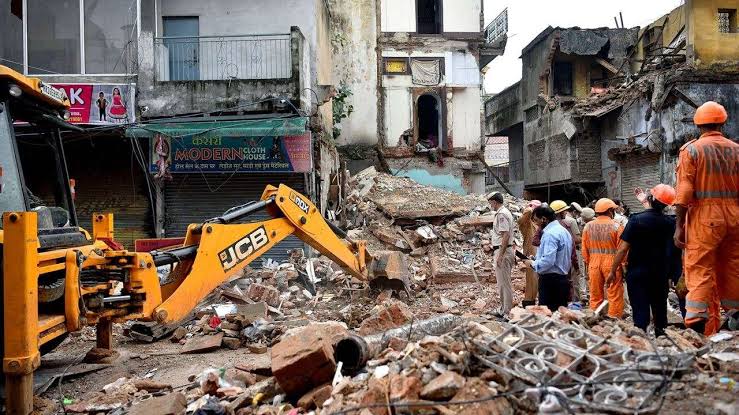
The Delhi government has proposed new rules for paying guest accommodations, including mandatory registration, rent regulation, CCTV cameras, and security measures, days after a PG building collapse in Satya Niketan, south Delhi, killed seven people, including five students and two laborers.
The proposed "Paying Guest Accommodation Regulation and Welfare Bill" aims to provide a formal legal framework for PG accommodations in major student and coaching hubs like Mukherjee Nagar, Laxmi Nagar, Rajendra Nagar, and North Campus.
According to the plan, all PGs functioning in Delhi must register and get an operational license from the zoning authorities within ninety days. No-objection certificates (NOCs) from the local government, police, and municipal corporation are required for the procedure.
A unique Paying Guest Registration Number (PGRN) will be given to each registered PG, and information on confirmed accommodations will be accessible via a proposed single-window digital platform.
RENT REGULATION SUGGESTED
Additionally, the proposed bill aims to address complaints about high deposits and arbitrary rentals.
To establish area-specific rent bands for PG lodgings, a Rent Regulation Committee has been proposed. Operators are prohibited from collecting more than three months' rent in advance or charging more than three months' rent as a security deposit.
A mandated 30-day notice period for tenants vacating a PG is another requirement of the program. It would also be forbidden to charge varying rents based on a person's gender, caste, religion, or place of origin.
Security guards and CCTVs are required.
Another important component of the suggested structure is safety precautions.
All PG entrances and common spaces would have to have CCTV cameras, and the footage would have to be kept for 30 days. At nite, PGs with 15 or more pupils would need to send out security personnel.
Maintaining visitor records and making sure a warden is available within a 500-meter radius are also included in the idea.
VERIFIED PGs ON A SINGLE PORTAL
Verified PG accommodations would be listed on the proposed GovPG portal, which would also offer details on rent, amenities, and security measures.
Additionally, the platform would allow students to anonymously file grievances. Additionally, a compliance grade for individual PGs has been suggested to assist students in evaluating housing prior to relocation.
Colleges and coaching centers should play a part.
An Institutional Accommodation Committee (IAC) made up of academics, student representatives, law enforcement, and local politicians is called for in the plan.
A 15-working-day timetable has been suggested for resolving concerns, and the committees would inspect PG lodgings on a quarterly basis.
Additionally, the system aims to reward PG operators who uphold high standards of compliance. A "Certified Student-Friendly PG" emblem, quicker loan access, and property tax exemptions may be available to those who show satisfactory compliance for two years in a row.
Additionally, the proposal recommends asking the GST Council for GST exemption for complying PG businesses.
THE PROPOSAL'S SAFETY CONCERNS
The proposed legislation highlights flaws in Delhi's current PG system by citing a number of incidences and concerns.
These include the Old Rajendra Nagar basement incident in 2024, reports of fire and safety concerns in PGs in Mukherjee Nagar, and complaints about arbitrary electricity costs, hidden cameras, and sexual harassment.
The proposed framework seeks to provide a formal grievance redressal system for students residing in PG lodgings, increase rental arrangement transparency, and set minimum safety criteria.
Nevertheless, the proposal also recognizes the difficulties of acquiring NOCs from various agencies, operating a centralized portal, establishing area-specific rent bands, and integrating small and informal PG operators into the regulatory system.
ABOUT THE BUILDING COLLAPSE IN SATYA NIKETAN
In Satya Niketan, a well-known business district close to Delhi University's South Campus, a five-story building that housed a boys' PG collapsed as repairs were being made to the building's basement.
Twelve persons were rescued on Monday nite after a 27-hour rescue effort including the NDRF, Delhi Police, fire department, and other agencies. Five people were hurt and seven people killed.
Since then, the building's owners and operators have been subject to legal proceedings, and local construction and safety breaches have come under examination.
Building owner Hari Ram Gupta, his wife Urmila Gupta, their son Mahesh Gupta, labor contractor Sanoj, and PG operator Sudhanshu are the five individuals who have been taken into custody in relation to the incident thus far. Shubham Tyagi, another PG operator, is still at large.
As a precaution, the Municipal Corporation of Delhi (MCD) has started demolishing the structures next to the collapsed structure. The top stories are being demolished in stages by officials using hammers after it was discovered that the nearby buildings presented safety risks.
Following the building fall, reports of fissures and structural instability prompted the evacuation of nearby PGs.


